
Five Things to Know About Artemis II NASA Scientist Suzanne Bell

Five Things to Know About Artemis II NASA Scientist Suzanne Bell
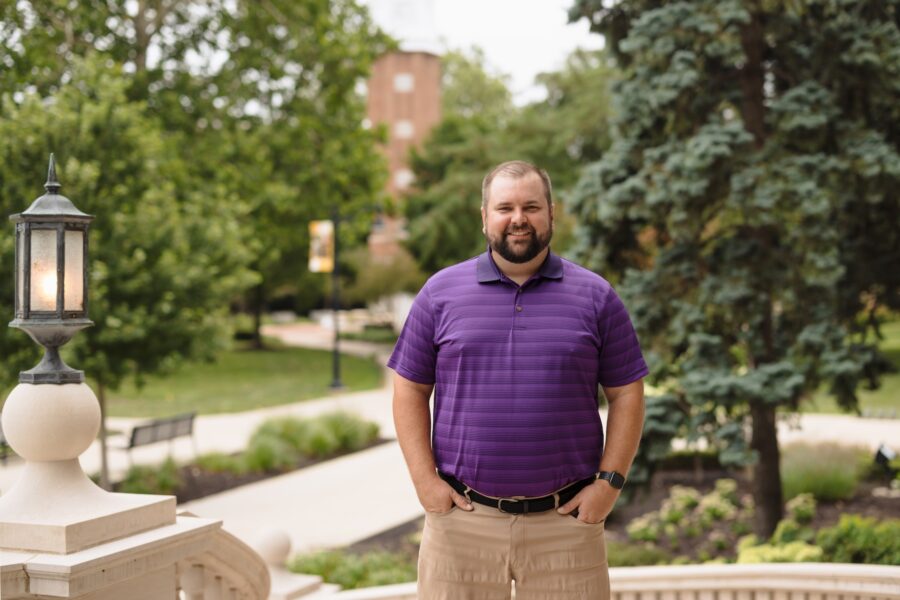
headshot of man

Seth Hurd

April 10, 2026 Academics, Alumni & Friends, Biological Sciences, Chemistry and Geosciences, Earth & Space Science, Research

Crescent Earth Over Lunar Horizon taken by NASA

Meet Dr. Suzanne Bell ’98: The NASA Scientist Behind Artemis II Crew Research

Suzanne Bell headshot

As Artemis II moves through its historic mission, an Olivet Nazarene University alumna is helping lead the research shaping the future of human spaceflight. Suzanne Bell (’98), Lead Scientist of NASA’s Behavioral Health and Performance Laboratory, is guiding efforts to understand how astronauts can go farther, stay longer and come home safely.

Bell serves as principal investigator for the Artemis Research for Crew Health and Readiness (ARCHeR), a study designed to turn astronaut experience into critical data. Her work supports NASA’s long-term goal of sustained human presence on the moon and, eventually, missions to Mars.

1. She discovered her calling at Olivet

Bell credits Olivet Nazarene University with helping her explore her interests while deepening her faith.

“One of the things I really appreciated about Olivet was being able to explore my interests while being in an environment that’s really focused on doing God’s work. That is so important to have when you attend a university, because even if you think you know what you want to do, sometimes your path changes.”

She also reflected on how her direction became clearer over time.

“I didn’t know the plan God had for me when I was a freshman at Olivet, but as I just trusted in him and I went to classes, the professors helped me explore my interests. I really started to understand what God’s plan in my life was. I just felt the passion ignite within me.”

2. Her path to NASA started with an unexpected email

Bell’s journey to NASA was not something she planned from the beginning. Instead, it began with a surprising opportunity, more than a decade ago.

“One day I get an email from some folks at NASA. I didn’t really think they meant me in particular. I thought it was a generic call for research, and then I get a follow up email a couple weeks later. That was ‘Dr. Bell. We’d really like you to do this for us.’ And I thought, oh, okay. NASA wants me to do something for them. This is pretty cool.”

3. She is leading critical research during Artemis II

Artemis II is the first time humans have travelled into deep space since the Apollo Era. During the mission, the crew completed a lunar fly by in which they collected information that can be used to prepare for landing on the moon and creating a sustained presence. As part of the mission, they flew further away from Earth into deep space than any humans in history.

A picture of the moon from space.

Bell leads Artemis Research for Crew Health and Readiness (ARCHeR), an important study in which she and her team are collecting data that will help NASA prepare for sustained missions beyond Earth orbit, including future lunar missions and journeys to Mars.

 4. Her ARCHeR work focuses on how humans and teams perform in space

Bell’s research examines how astronauts function in one of the most extreme environments imaginable.

“We have four major areas in the study.”

Those areas include how astronauts interact with spacecraft systems, how they function as a team in small quarters, how they manage behavioral health and how sleep impacts performance.

“The crew is in a very small space, about the size of a camper van.”

At one point in the mission, astronauts operate on limited sleep to test performance under stress.

“They had four hours of sleep and then will stay awake till 9:00 AM tomorrow to do all of these different things that we need them to do before they continue on to the moon.”

Through pre-mission, in-mission, and post-mission data collection with several methods including wearable devices. Bell’s team gathers data to better understand how astronauts respond to these conditions.

“They [the Artemis II crew] are in the best position to keep future Artemis Crews safe. And so we have to learn from them. We have to use this information for the future.”

5. Her work is helping prepare humans for Mars

While Artemis II is a major milestone, Bell’s work is also shaping the future of deep space exploration.

Bell is involved in multiple research projects that study how individuals and teams adapt and perform in the conditions expected for Mars. She is Co-Investigator and a central figure in NASA’s CHAPEA (Crew Health and Performance Exploration Analog), in which a crew of 4 lives and works for 378-days in a Mars-resource restricted environment including a significant communication delay with “Earth” and pre-positioned food supply. The CHAPEA Mission 2 crew is currently midway through their second mission.

For Bell, the impact of this work is deeply personal.

“It is amazing to think that someday we will be landing on Mars and that my kids will know their mom was a part of this story. To me, that is the most special part about what I do.”

To learn more about the Olivet’s Walker School of STEM, click here.

To learn more about Dr. Bell’s pioneering work:

Podcast: Mind over Mars: The psychology of space exploration, with Suzanne Bell, PhD…–Speaking of Psychology – Apple Podcasts

Article: NASA’s Suzanne Bell enables elite teams to thrive in space

Photos courtesy of NASA

headshot of man

Seth Hurd

Seth Hurd (’06/’08 MOL/’12 M. Hist) is the founder of Manx Solutions. He lives in St. Louis, MO with his wife Amanda, and daughters Ava and Emery.

Student on main campus wearing pink sweater and holding water bottle.

Where Your Future Begins

We Believe. You Belong Here. Discover why Olivet is a place where faith meets calling. Take the first step today.

Plan a Visit Start my Application